
A Mercia Autumn Harvest Guide: Apples, Pears and Pumpkins
A practical Mercian guide to autumn's best eating — how to choose, cure and store apples, pears and pumpkins, with simple ways to cook and preserve the glut.
The first proper cold arrives in the Midlands long before the calendar admits it. One morning the windscreen needs scraping, the lane smells of wet leaves, and the kitchen table is covered in fruit nobody bought. This is the best fortnight of the year for anyone who cooks: apples heavy on the bough, pears finally worth eating, and squash gone the colour of old brass. Here is how to pick the good stuff, make it last, and cook it well.
Reading the Season: What Is Ready, and When
Autumn in Mercia moves fast, and the gap between a good apple and a disappointing one is often a fortnight. If you buy from a farm shop, a market stall or the box by a farm gate, it helps to know which week you are in.
September brings the early eaters — Discovery, Worcester Pearmain — and pears such as Williams that you should eat within days, not weeks. October is the real thing: Bramley and maincrop cookers coming in, Egremont Russet and Ashmead's Kernel filling the trays, Conference and Comice pears, and squash firming up in whatever sun we get. By November the late keepers are down and the orchard work turns to sorting and storing. Misting mornings over the Severn, damp plough in Shropshire, the last hedgerow blackberries alongside a windfall apple: this is the season that fills freezers and shelves for winter.
Choosing Apples: Use Your Hands, Not the Label
A label tells you the variety. It does not tell you how long the fruit has sat in a chiller, or whether it was dropped. A few seconds of handling will.
- Weigh it. A good apple feels heavy for its size. Light ones are drying out.
- Press it. It should be hard and tight, with no soft give, especially around the stalk.
- Sniff the blossom end. A faint scent is fine; a strong sweet smell means it is going over.
- Welcome the rough. Russeting, that sandy brown patch on the skin, is a feature of some of the best-flavoured apples, not a fault.
- Skip the windfalls. Bruised fruit is for juice or sauce today, not for storing.
For keeping, choose late varieties with firm flesh. Wrap each apple in newspaper, set them stalk up in shallow boxes so they do not touch, and keep them cool, dark and frost-free — a garage, a shed, an unheated back room. Check weekly and remove anything softening at once, because one rotting apple takes its neighbours with it. Kept properly, a November Bramley is still cooking in February.
Pears Are Not Apples
Pears reward a different approach. They ripen from the inside out, so by the time the outside feels soft the middle is often grainy and brown. Buy or pick them hard and test ripeness by pressing the neck just below the stalk with your thumb. If it gives slightly, the pear is ready; if the whole fruit yields, you are a day late.
Store pears hard and cool, then bring a few at a time to finish on the windowsill. A pear beside a banana ripens faster. Slightly underripe fruit is better for cooking: halve and core them, then poach in cider or red wine with lemon peel and a clove until a knife slides in easily. Comice and Conference are excellent with blue cheese and walnuts; the old perry pears of Herefordshire and Worcestershire, too tannic to eat raw, are grown for pressing and are worth tracking down at a local mill.
Pumpkins and Winter Squash: Cure Before You Store
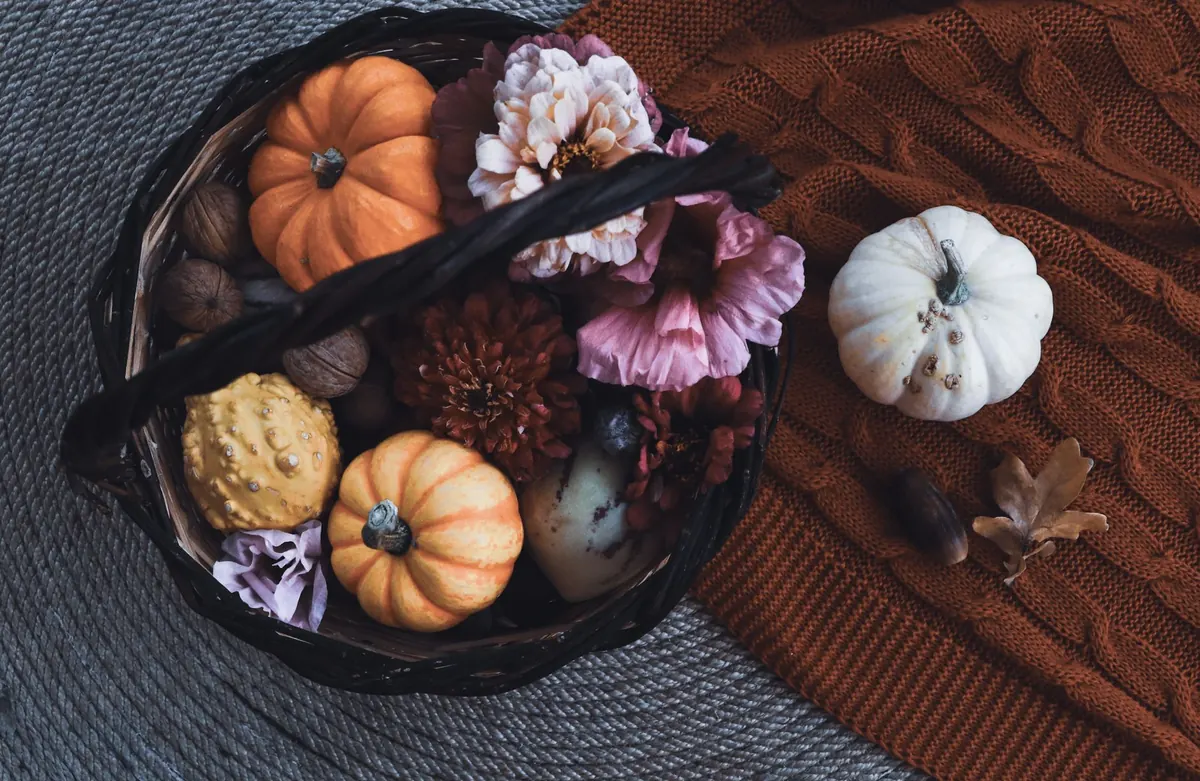
A pumpkin straight off the field will not keep. The skin needs to harden and small wounds on the stem need to seal, which is what curing does. Crown Prince, Harlequin, onion squash and good butternuts store beautifully if treated properly. The big pale carving pumpkins are bred for lanterns, not flavour — watery and stringy.
- Cut with a good hand-span of stem and never lift the fruit by it.
- Leave it in a warm, sunny, airy spot for ten days to a fortnight, turning once, until the skin resists a fingernail.
- Brush off soil with a dry cloth. Do not wash it.
- Store on slatted shelves or boards, not directly on concrete, spaced so air moves around each fruit.
- Check monthly. A sound squash feels heavy and rings hollow; use any that begin to soften straight away.
In the Kitchen: Three Ways Into the Glut
Apples
Sort the boxes by use. Bruised fruit goes first, into sauce with a splash of water and a knob of butter, or into a crumble with blackberries. Firm eaters go on the table; the best keepers stay wrapped. Crab apples, if you have them, are worth simmering for jelly and for the pectin that sets other preserves. Halved apples baked with mincemeat and a spoonful of honey will feed a crowd for very little.
Pears
Roast pear halves cut-side down in butter until they caramelise, then serve with roast pork or a sharp cheese. Chop firm pears into a chutney with onion, ginger and vinegar. Overripe ones become compote with a squeeze of lemon, or sorbet.
Pumpkin and Squash
Roast thick wedges with oil, salt and thyme until the edges catch — dry heat concentrates the flavour far better than boiling. For soup, roast first, then blitz with stock and a spoonful of crème fraîche. Scoop and rinse the seeds, dry them on a cloth, toss with oil and salt and roast in a low oven until pale gold.
A Weekend's Work
You do not need a preserving kitchen. Two or three hours on a Saturday will set you up: wrap and box the keepers, roast two squash and freeze the flesh in meal-sized portions, and make one batch of something — apple chutney, pear compote, a jug of fresh juice. Label everything with the date, because next February you will not remember.
If you are new to preserving, follow a tested recipe rather than improvising the vinegar and sugar; they are there for keeping quality as much as flavour. And share the surplus. An apple glut is a nuisance only until you find a neighbour with a press, a baking habit or a hungry family.
Photo: hayriyenur . / Pexels