

A Seasonal Guide to British Asparagus: Buying, Storing and 5 Simple Recipes
British asparagus has a short spring season, so buy firm spears, store them like cut flowers, and cook them simply — roasted, griddled, blanched or in soup.
British asparagus has one of the shortest seasons in the calendar, and that brevity is exactly why it tastes so good when it finally arrives. Traditionally the season opens around St George's Day on 23 April and closes at the summer solstice in June, though weather and polythene tunnels shift those dates a little either way. Spears are cut by hand in the cool of the morning and reach the shops within a day, which is why they need so little from you: a hot pan, a knob of butter, a squeeze of lemon. Here is how to buy it well, keep it fresh, and cook it five ways before the season slips past.
Why British asparagus is worth waiting for
Imported asparagus travels for days, and the sugar in the stalk starts turning to starch the moment it is cut. Home-grown spears are usually on a plate within 24 to 48 hours, and you can taste the difference: sweet, nutty, with a snap rather than a stringy chew. The main green varieties grown here — Gijnlim, Backlim, Connover's Colossal — are bred for flavour and yield rather than shelf life, which tells you something about how they are meant to be eaten.
You will also see purple asparagus, sweeter and slightly softer, and white asparagus, grown under soil so the spears never see light. White spears are a different project in the kitchen: they must be peeled properly and cooked longer, and they suit a hollandaise or a brown butter sauce. If you are new to the season, start with green and work outwards.
How to choose spears
Ignore thickness as a measure of quality. Thin spears come from young crowns, fat ones from older plants, and both can be excellent — the difference is mainly cooking time. What matters is freshness.
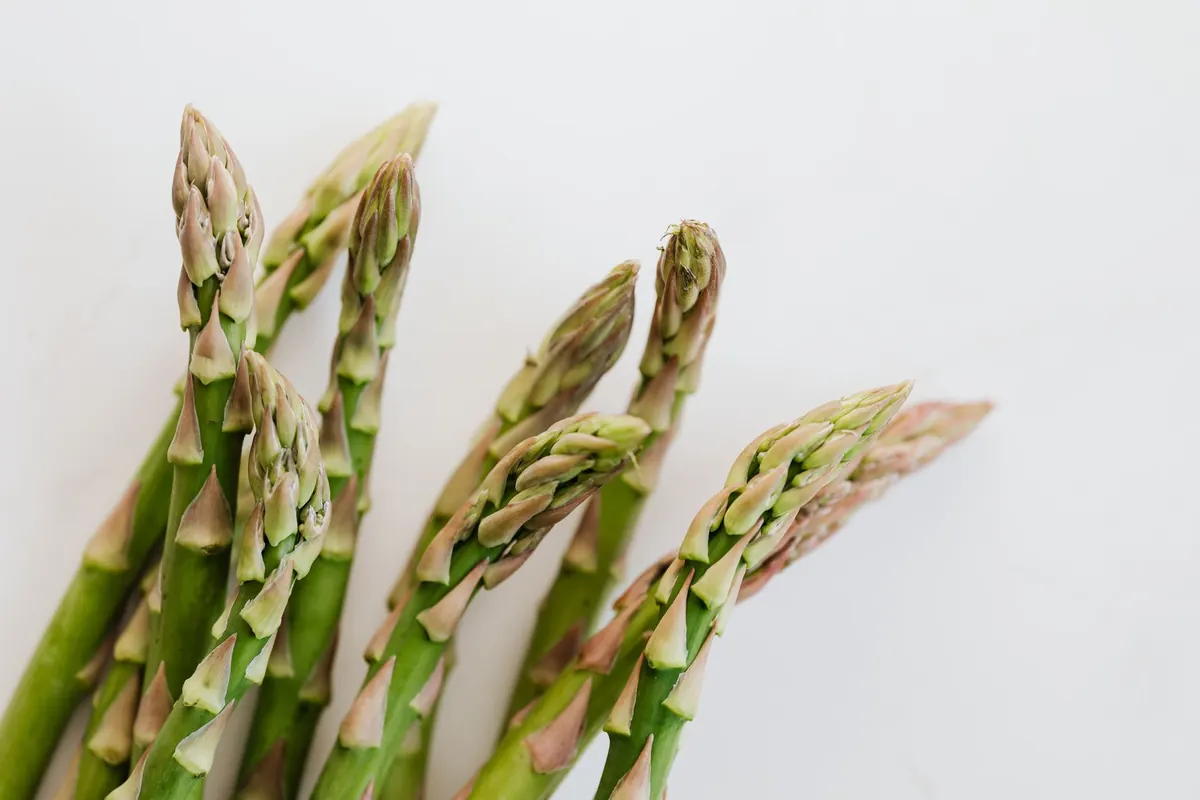
- Tips should be tight, pointed and closed, not splayed or beginning to feather.
- Stalks should be firm and glossy, standing straight rather than flopping over your hand.
- Cut ends should look pale and moist, not brown, hollow or shrivelled.
- Smell should be faintly grassy and sweet. If there is no scent at all, they have been sitting around.
At a farmers' market, ask when the spears were cut. A good grower will tell you the day, not the week. Loose spears sold from a crate usually beat pre-packed bundles, because you can pick the ones you want.
Storing: treat them like cut flowers
Asparagus is a stem, and it behaves like one. Left dry in the salad drawer it will wrinkle within a day or two. Give it a drink instead.
- Trim a centimetre off the base of each spear.
- Stand them upright in a jug or jar with 2–3cm of cold water in the bottom.
- Cover the tips loosely with a plastic bag or a shower cap and put the whole thing in the fridge.
- Change the water every day or two. They will keep for four or five days this way.
If you have no room for a jug, wrap the spears in damp kitchen paper, then in a bag, and lay them flat in the coldest part of the fridge. Do not soak them in water, and do not wash them until you are about to cook. For a glut, blanch the spears for two minutes, cool them in iced water, dry them thoroughly and freeze in a single layer — they will never be quite the same, but they are good in soup and risotto in November.
Trimming, peeling and the snap test
Hold a spear near the base and bend it; it will break naturally where the woody part ends. That is a decent guide, though some cooks prefer to cut rather than snap, because snapping can waste good stalk. If the ends feel tough, trim a little higher with a knife.
Thick spears benefit from peeling: run a vegetable peeler down the lower third, taking off just the outer layer. Purple asparagus is usually peeled all the way up, and white asparagus always is. Save every trimming — the peel, the woody ends, the snapped bases — in a bag in the freezer. They make a fine soup base or a quick stock, simmered with an onion for twenty minutes and strained.
Five simple recipes for the season
1. Roasted in a hot oven
Heat the oven to 200°C fan (220°C conventional, gas mark 7). Spread the spears in a single layer on a baking tray — crowd them and they steam — toss with a tablespoon of olive oil and a good pinch of salt, and roast for 8 to 12 minutes depending on thickness. The tips should crisp and darken slightly. Finish with lemon zest and, if you like, shaved parmesan. This is the best method for thick spears.
2. Charged on a griddle
Get a heavy frying pan or griddle properly hot, brush the spears with a little oil, and cook for three to five minutes, turning once, until they blister in places. Take the pan off the heat, drop in a knob of butter, a squeeze of lemon and plenty of black pepper, and roll the spears through it. A few drops of sherry vinegar at the end cuts the richness beautifully.
3. Blanched and dressed
Bring a wide pan of well-salted water to the boil. Cook medium spears for 90 seconds to two minutes, then lift them straight into a bowl of iced water to stop the cooking and hold the colour. Drain, dry on a tea towel, and dress at room temperature with a vinaigrette of Dijon mustard, white wine vinegar, olive oil and finely chopped shallot. Serve as a starter with good bread, or alongside roast chicken.
4. With eggs
The oldest pairing, and still the best. Soft-boil an egg for six minutes, butter a slice of toast, and lay blanched or roasted spears on top before breaking the egg over them. For something grander, wrap bundles of cooked asparagus in ham, top each with a poached egg, and spoon over hollandaise.
5. Soup from the trimmings
Soften a chopped onion in butter, add a diced potato, the asparagus trimmings and any thick stalks cut into pieces, then cover with stock. Simmer for 15 to 20 minutes until the potato is tender, blitz until smooth, and loosen with a little cream or milk. Finish with lemon juice, which lifts the whole thing, and a swirl of olive oil. Freezes well.
Make the most of six weeks
The trick with a short season is not to get clever with it. Buy little and often, cook it the day you bring it home, and keep the flavours plain. One roasting tray, one griddle pan and one pot of soup will see you through to the end of June. When the last spears disappear from the market, you will know you did them justice — and you will have something to look forward to next spring.