Beginner's Guide to Baking Bread in a Dutch Oven
A step-by-step beginner's guide to baking a round loaf in a Dutch oven, covering preheating, shaping, scoring and how to tell when the bread is done.
A cast-iron pot with a heavy lid does two jobs at once: it traps the loaf's own steam for the first half of the bake, then lets it go. That single trick is why an ordinary home oven can turn out bread with a crackling crust and an open, airy crumb. If you have never baked a loaf before, this is the method to start with. It asks for very little equipment, it forgives small mistakes, and it produces a round loaf that looks like it came from a proper bakery.
Here is the whole process, from a cold pot to a cooling rack.
Why a Dutch Oven Works So Well
Two things happen inside a closed pot. First, moisture from the dough turns to steam and cannot escape, so the surface of the loaf stays soft and flexible long enough to expand fully. That early burst of rising is what gives you a tall loaf instead of a flat one. Second, the pot itself is a solid mass of hot iron, and it hits the dough with fierce, even heat from below and all around.
A tray in an open oven dries the crust out early, setting it before the loaf has finished growing. The pot delays that moment. When you finally lift the lid, dry heat finishes the job and browns the crust deeply.
Any heavy pot with an oven-safe lid will do: enamelled cast iron, bare cast iron, a clay baker, even a sturdy stainless pan with a metal lid. Check the knob and handles. A plastic knob rated to 200°C will not enjoy a 240°C oven, though you can often swap it for a metal one or simply bake a little cooler.
What You Need
- A Dutch oven, 4–6 litres. Round is easiest for a round loaf. A combo cooker, where the shallow pan becomes the lid, is especially easy to load.
- A kitchen scale. Bread is far more reliable by weight than by cups.
- A bench scraper or stiff spatula. For lifting and folding sticky dough.
- Parchment paper. Not essential, but it makes lowering the loaf into a hot pot much less nerve-wracking.
- A razor blade, craft knife or lame. Something genuinely sharp for scoring.
- A clean tea towel and, if you have one, an instant-read thermometer.
A dependable first dough: 500g strong white bread flour, 350g lukewarm water, 10g fine salt and 7g instant yeast. Stir it together into a shaggy mass, cover and leave for 20 minutes, then knead for 8–10 minutes until smooth and elastic. Cover and let it rise until roughly doubled — usually 1½ to 2 hours in a warm kitchen, longer if the room is cool.
Preheat Longer Than Feels Reasonable
Put the pot and its lid into the oven, then heat to 240°C (465°F), or 230°C (450°F) with fan. Wait at least 30 minutes after the oven signals it has reached temperature. Forty-five is better. The iron needs to be soaked through with heat, not just warm on the surface, and a lukewarm pot gives you a pale, stalled loaf.
A word on safety
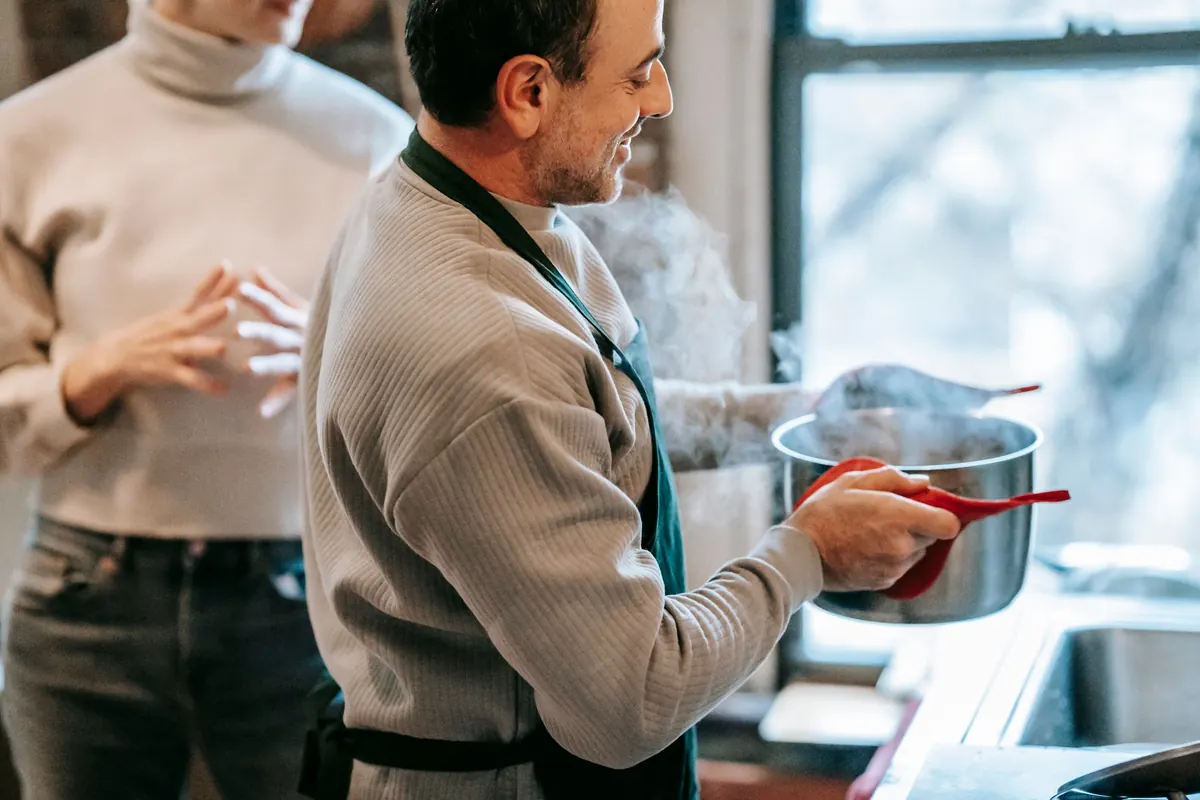
That pot is seriously hot and stays hot. Use dry, thick gloves or folded towels rather than a damp cloth, which conducts heat straight to your hand. Set it down on a trivet or a wooden board, never directly on a cold stone worktop. And when you lift the lid, angle it away from your face — the steam that rushes out is hotter than it looks.
Shaping a Round Loaf
Tip the risen dough onto a lightly floured surface. Pat it into a rough square, fold the four corners into the middle, then flip it over so the folds are underneath. Now cup your hands around the dough and drag it gently towards you across the worktop. The friction pulls the surface tight and creates a smooth, taut top. Thirty seconds to a minute is plenty. Try not to add much extra flour; a little stickiness helps here.
For a first loaf, the simplest route is to place the shaped dough seam-side down on a sheet of parchment, cover it with a tea towel and leave it for 45–60 minutes, until it looks puffy and a gentle poke springs back slowly. If it springs back instantly, it needs longer.
Scoring: One Decisive Cut
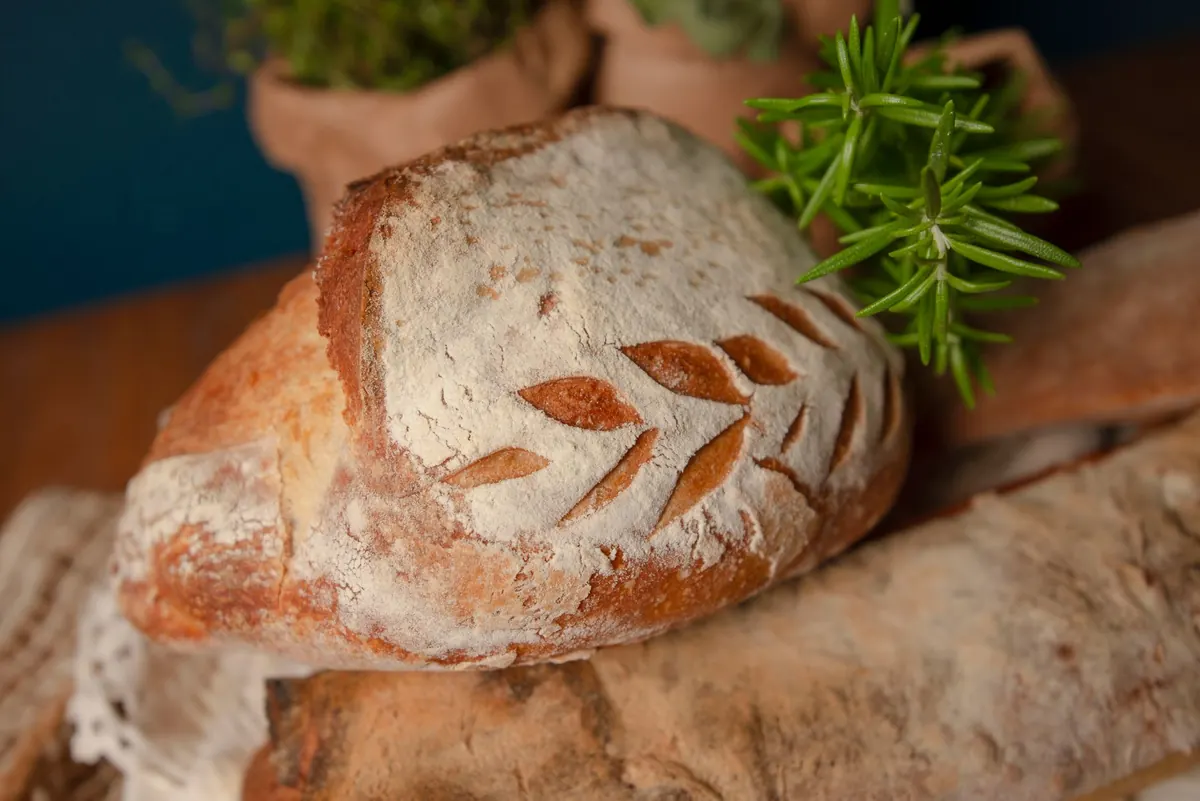
Scoring gives the loaf a controlled place to open. Without it, the dough tears wherever it happens to be weakest, often along the base, and the loaf spreads sideways instead of rising.
Hold the blade at a shallow angle — around 30 degrees to the surface — rather than pointing straight down. You are lifting a flap of dough, not sawing a slit into it. One confident stroke, roughly 1.5cm deep, running from one end of the loaf to the other. Hesitant, repeated cuts drag the dough and deflate it.
A single long slash down the middle is the classic and the safest choice for a beginner. A cross or a square works too, but keep it to one shape you can commit to. Score immediately before baking, then move quickly.
Into the Oven, Then Out of the Lid
Lower the loaf into the hot pot, using the parchment as a sling and holding two opposite corners. Trim any paper that sticks up above the rim, since exposed edges can scorch near a hot element. If your parchment is rated below your baking temperature, drop the oven to 220°C (425°F) for the whole bake; you will still get good bread, just a slightly lighter crust.
Put the lid on and bake for 20 minutes. Then take the lid off, reduce the heat to 220°C (425°F), and bake for another 20 to 25 minutes.
The steam question
Some bakers toss an ice cube into the pot before closing the lid, or flick in a tablespoon of water. It is optional. The dough supplies plenty of its own steam, and the ice cube mainly matters if you have opened the lid early and lost your moisture.
Knowing When It's Done
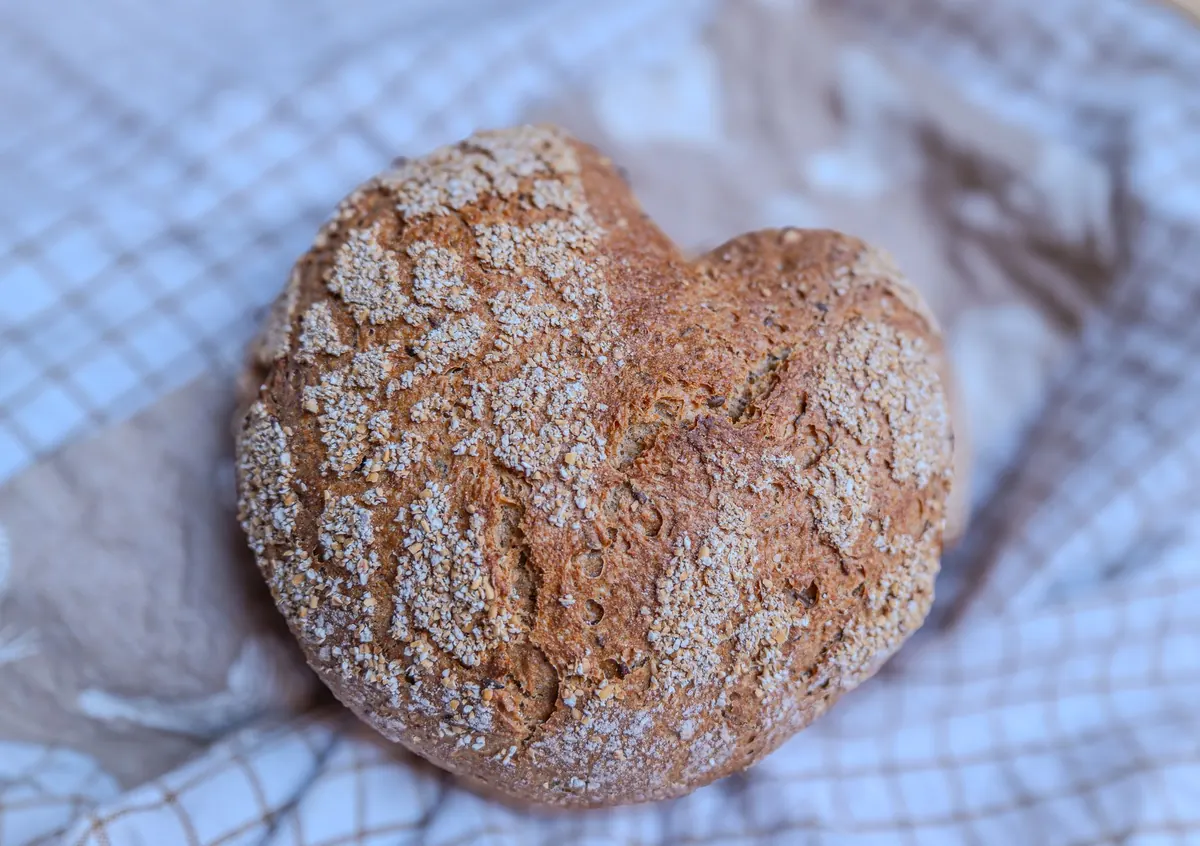
Look for a deep, chestnut-brown crust rather than a pale gold one. If you have a thermometer, the centre should read around 96–99°C (205–210°F). Tap the base of the loaf: a fully baked one sounds hollow. A pale loaf just needs five more minutes, uncovered.
Then wait. Cool the loaf on a wire rack, uncovered, for at least an hour — two if you can manage it. Cutting into hot bread gives you a gummy, doughy crumb, because the starch is still setting and moisture is still moving through the loaf. It smells wonderful and tastes disappointing.
Your First Bake, Start to Finish
- Mix the dough, rest 20 minutes, then knead until smooth.
- Rise until doubled, 1½–2 hours.
- Shape into a tight round and rest 45–60 minutes on parchment.
- Preheat the pot at 240°C for 30–45 minutes while the loaf proves.
- Score with one confident slash.
- Bake 20 minutes with the lid on, 20–25 with it off.
- Cool on a rack for an hour before slicing.
Judge the dough rather than the clock. A cold kitchen, a wet dough or a tired yeast will all stretch the timings, and none of that means you have done anything wrong. Keep a few notes on what you used and how long it took. The second loaf is always easier than the first, and by the fourth you will stop measuring and start recognising what the dough should feel like.
Photo: Sabine Freiberger / Pexels